written By Gareth Huw Davies for DailyMail
Think the high heel of Italy's famous 'boot' and you have Puglia, the country's buzzing destination. This long-forgotten region has been climbing the travel league table and is now challenging Tuscany and Umbria as the chic place to visit. Here is Gareth Huw Davies's must-see-and-do list in this tucked-away region:
1. Look out
Puglia (Apulia in Italian) is a land of vivid colours and rustic charm - all low hills and broad red plains smothered in crops and gnarled old olive trees. The big scenic feature is the long, east-facing Adriatic coastline.
Dotted with pretty seaside towns and bays of clear water and white sand, Italy's south-east extremity has been an invaders' thoroughfare down the millennia. Its early-warning system survives in ancient watchtowers along the Salento peninsula.
There are about 50 left, some Norman. Another ancient feature is the string of 800-year-old churches and cathedrals. Finest of all is in the seaside town of Trani. Its dazzling, chalk-white, big-impact cathedral sits on a broad square, on the lip of the turquoise sea.
2. Floor show
One of the many little-known marvels scattered about Puglia is in Otranto. This peaceful place is on the clear, clean Adriatic, near the tip of the heel, where Albania is much closer than Rome.
The astounding 800-year-old Tree of Life mosaic is in the Norman cathedral. Filling the entire floor of the nave and choir, it is arranged like a standard family tree. The trunk rests on two elephants.
Lose yourself in a fabulous and dotty mix of images spread through the branches, depicting Creation, the fall of Adam and Eve and Judgment Day. There's a supporting role for Noah and other biblical worthies as well as King Arthur, Alexander the Great, the Tower of Babel and assorted dragons, unicorns and Norse gods.
3. Bold build
In the 17th Century the city fathers in little Lecce commissioned their own masterpieces to compete with the grand cities in the north. The exuberant baroque architecture gave the town the unofficial title 'Florence of the South'.
Six fine churches are scattered through the compact historic centre, alongside Piazza Sant'Oronzo, the main square, the Roman amphitheatre, triumphal arch and shady courtyards under wrought-iron balconies.
Leading the over-the-top list is one of the most exciting baroque churches in Italy, the 16th Century Basilica of Santa Croce. Carved cherubim, mermaids and wolves swirl around the lavish facade and encircle the Rose Window. The Trattoria Le Zie does amazing home cooking.
Chiesa di San Domenico, Nardò, Lecce, Puglia
4. The chic of it
One of the key words in Puglia's current tourism boom is masseria. These once-crumbling fortified farmhouses, with turrets and thick walls to deter invaders, are being spruced up to boutique hotel standard. Rooms look out over orange groves and shimmering sea. Now seaside watchtowers are being converted, too. Expect sumptuous bed linen, swanky furniture and polished antiques. Some rooms have their own private gardens, or a pool. Many have a spa and there's usually a restaurant. The new deal is cookery lessons from the chef, and wine and olive oil tasting. Bikes are often supplied for touring.
5. Power of eight
The 13th Century Castel del Monte has the secret of eternal youth built into its ramparts. The exceptionally well-preserved, honey-hued fortress, commanding a rocky peak near Andria, is more maths formula than fairy castle. The perfectly regular shape is a homage to the figure 8, with octagons everywhere. Experts are still trying to fathom what it all means. Built by the Holy Roman Emperor Frederick II, this unique piece of medieval military architecture is one of two world heritage sites in Puglia.
The others are the trulli - little stone houses with conical roofs - around Alberobello. Some are very old indeed. They were built without mortar using an ancient technique.
6. Smart chefs
Puglia chefs know how to make the land work for them. The cuisine is simple and glorious, based around the local orecchiette (ear-shaped) pasta and a cornucopia of vegetables.
Tough times made cooks inventive with chickpeas, capers, green peppers, aubergines and basil. They even have their own vegetable, the barattiere, a cross between a cucumber and a melon. Look around for small, extremely hospitable family restaurants. My drink of choice would be deep red Primitivo wine.
Article from http://www.dailymail.co.uk/travel/article-1329508/Italy-holidays-Six-things-Puglia.html
Back to SIS homepage >>> http://www.sispropertyandtourism.co.uk >>>
Monday, November 15, 2010
The historic, homely heel at the end of Italy's boot: Six things you must do in Puglia

Saturday, September 11, 2010
Nardò DOC Red and Rosè Wines - Ancient wine for a new market!

The Rosé should be drunk with moderately rich dishes, such as boiled sea fish with sauce, stuffed cuttlefish, pasta and chickpea soup, baked gilthead. The read instead is a good match for red meat, especially lamb, pork, mixed boiled meats and cold pork meats.
As well as mentioning the Registered Designation of Origin, the label must include all the information laid down by the law: native region; designation, in which the cultivar from which the wine comes is matched to the geographical area in which it is grown; nominal volume of the wine; bottler’s name or corporate name and address; bottler’s number and code; country; batch number; ecological information.
The perfect serving temperature for the rosé is 12-14°C, in glasses for smooth rosé wines within two years of the harvest. The red should be served in long glasses at a temperature of about 18°C.
Friday, May 21, 2010
How to buy a house
Actually, how to think about buying a house.
You don't see a lot of ads trying to sell you on spending too much money on a house. It's more subtle than that. The marketing is all around us, and has been for years. The enormous social pressure and the expectations that come with it lead to misunderstandings and confusion. Here's my advice to someone in the market:
1) In an era where house prices rise reliably (which was 1963 to 2007), it was almost impossible to overpay for a house. It was an efficient market, and rising prices cover many mistakes. Investing in houses in the USA was a no-brainer. More leverage and more at stake just paid off more in the end. This consistent, multi-generational rise taught us more than an ad every could: buy a lot of house with as little downpayment as you could.
2) A house is not just an investment, it's a place to live. This is the only significant financial investment that has two functions. Things like cars and boats always go down in value, so most of the time, if you're investing, you're doing it in something that you don't have to fix, water, fuel or live in. You shouldn't fall in love with a bond or a stock or a piece of gold, because if you do, you won't be a smart investor. The problem (as people who sell and fix and build houses understand) is that you just might fall in love with a house. What a dumb reason to make the largest financial investment of your life.
3) The psychology of down markets is irrational. Rising house prices might be efficient (many bidders for a single item lead to higher prices), but when there aren't so many bidders, irrational sellers (see #2) don't lower their prices accordingly. So, inventories get longer and it's easy for the prospective buyer to think that a certain price is the 'right' price because so many people are offering houses at that price. Just because someone offers a price, though, doesn't mean it's fair in a given market.
4) Along the same lines, anchoring has a huge impact on housing prices. If someone offers a house for $800,000 and you think it's worth half that, you don't offer half that. No, of course not. The price is a mental and emotional anchor, and you're likely to offer far more.
5) The social power of a house is huge. When you buy a big house or an expensive house, you are making a statement to your in-laws, your family, your neighbors and yourself. Nothing wrong with that, but the question you must ask yourself is, "how big a statement can I afford?" How much are you willing to spend on personal marketing and temporary self-esteem?
6) Debt is an evil plot to keep you poor. If buying a bigger house (or even a house with a living room or a garage) is going to keep you in credit card debt, you've made a huge financial error, one that could cost you millions.
7) By the time you buy a house, you probably have a family. Which means that this is a joint decision, a group decision, a decision made under stress by at least two people, probably people that don't have a lot of practice talking rationally about significant financial decisions that also have emotional and social underpinnings. Ooph. You've been warned. Perhaps you could add some artificial rigor to the conversation so that it doesn't become a referendum on your marriage or careers and is instead about the house.
8) If you have a steady job, matching your mortgage to your income isn't dumb. But if you are a freelancer, an entrepreneur or a big thinker, a mortgage can wipe you out. That's because the pressure to make your monthly nut is so big you won't take the risks and do the important work you need to do to actually get ahead. When you have a choice between creating a sure-thing average piece of work or a riskier breakthrough, the mortgage might be just enough to persuade you to hold back.
9) Real estate brokers, by law, work for the seller (unless otherwise noted). And yet buyers often try to please the broker. You'll never see her again, don't worry about it. [Let me be really clear about what I wrote here, just in case you'd like to misinterpret it: When a prospect sees an ad or goes to an open house, she is about to interact with a broker. That broker, in almost every case, is hired by the seller and has a fiduciary responsibility to the seller to get the very best price for the house. There are exceptions, like buyer's brokers, but those brokers, as I said, note that they are representing the buyer--how can you represent someone without telling them? Many brokers like to pretend to themselves that they are representing both sides, and while that's a nice concept, that's not the law.]
10) You're probably not going to be able to flip your house in nine months for a big profit. Maybe not even nine years. So revisit #2 and imagine that there is no financial investment, just a house you love. And spend accordingly.
I'm optimistic about the power of a house to change your finances, to provide a foundation for a family and our communities. I'm just not sure you should buy more house than you can afford merely because houses have such good marketing.
Article from http://sethgodin.typepad.com/seths_blog/2010/04/how-to-buy-a-house.html
Back to sispropertyandtourism.co.uk homepage
Tuesday, May 11, 2010
Financial Times article: Lecce’s architectural wonders

In the baking summer heat it is a relief to enter the walled city of Lecce – the harsh light is absorbed by the famed limestone of its buildings. Spared the hordes of foreign tourists that cram the renaissance cities of Venice and Florence, Lecce has a provincial charm. The churches are quiet, but this is a university town, with a buzz in the bars, pastry shops and bookstores.
A stone foundation block below ground level in the Palazzo Adorno reveals an inscription in Hebrew, “House of God”, testifying to its origins in what had been the local synagogue. Other Jewish remnants went into the construction of Lecce’s Church of the Holy Cross, consecrated as a basilica by Pope Pius X in 1906. Building started in 1549 and took about a century to complete. While the side chapels are richly ornate, the basilica – in Greek-Roman style modelled on the Temple of Jerusalem – is light and airy, beautifully proportioned with 12 pillars.
There are several villages close to Lecce where the inhabitants still speak a form of ancient Greek, while at the Church of Saint Nicholas in Lecce the liturgy is in Greek according to the Byzantine rite.
Before moving on, my guide introduces a local, heavenly treat – black coffee doused with ice and almond milk (caffè in ghiaccio con latte di mandorle) and oval-shaped lemon custard pastries (pasticciotti).
Being inland, on the southeastern tip of Italy’s boot, Lecce was spared the sieges and destruction that befell the Norman cathedral ports, such as nearby Otranto where the bones and skulls of 800 Christians martyred by the Ottomans are on display in the crypt.
When the coastal towns declined in status with the discovery of the Americas and trade shifted from east to west, Lecce survived on the backbone of its rural economy and its importance as a religious centre.
Yet the 20th century was less kind and in the 1970s much of the city lay in disrepair, its tobacco and textile industries unable to match east European and Chinese competitors.
But efforts to regenerate the area, from the late 1980s, appear to have been a success. So much so that a visitor to the city could be tempted to place Lecce less in the company of chaotic southern cities like Naples and instead with the far away prosperous north. Yet the burghers of baroque feel very much of the south.
Lecce’s architectural history can be surveyed in one sweep across the main piazza, Saint Oronzo. Towering above the scene is a statue of Lecce’s patron saint (Saint Oronzo) perched atop a 25-metre-high marble pillar from Roman times that had been one of two marking the end of the Appian way, stretching across Italy to Brindisi. The column was donated to Lecce by the people of that Adriatic port to mark the saint’s reputed triumph over the plague in the 1600s.
Next to the square is the half-uncovered Roman amphitheatre, which was once big enough to seat up to 15,000 people. It was discovered in 1908, having been lost in the 1500s. Excavations were carried out under Mussolini, who was intent on rebuilding a national sense of empire. In the process, the renaissance-era town hall on the square’s edge was demolished, and municipal buildings erected instead.
The severe buildings are yet another reminder that Lecce’s compelling character has been forged out of so many diverse influences. Written by Guy Dinmore is the FT’s Rome correspondent
http://www.ft.com/cms/s/2/2f32b6a2-48da-11df-8af4-00144feab49a.html
Wednesday, May 05, 2010
Borgo Cenate, luxury villas for sale in Santa Caterina di Nardò, Salento, Puglia
New development of 6 luxury villas for sale in Santa Caterina di Nardò, south-western coast of Puglia Italy. This unique development in XIX-century style is located in one of the most exclusive area of Puglia and next door to the most important villa of the Cenate, ancient borough where noble families from all Italy used to spend their holidays and own their villas. This under construction development consinst of 6 independent semi-detached villas each spread on two levels: ground and first floor, with terraces, private garden and car parking. The villas will be built in 3 different sorts and each will have 3 bedrooms, 2 bathrooms, living room with dining area and kitchen corner, garden, car parking and storages. The development will be finished with high standard specification following the character of the region and its typical materials. Part of the building will have vaulted and star ceilings and part with particular and original roofing tiles. The villas will be elegant and comfortable at the same time, will respect the building character of 19th century and the existing environment. The location will be unique: next door to the most exclusive villas of Puglia, only 10 minutes walking from Santa Caterina beach and piazza, 5 minutes driving from Nardò town centre, 10 mins from Gallipoli, 20 mins from Lecce and 50 mins from Brindisi international airport. Become an early owner of one of these unique villas, with a little payment you will book it, fix the price and not pay the agency commissions. Full details on http://www.sispropertyandtourism.co.uk/public/Sale/Villa/SV695LS.php
Saturday, May 01, 2010
Italy, Puglia, Salento: Property market analysis
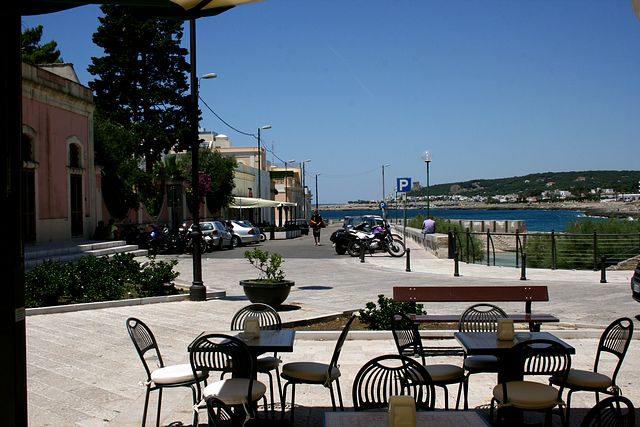
As for the rest of Europe, last winter we had a good new! Ryanair and other low cost airlines, start new direct flights from most of the Europe's airports to Puglia and opened new markets for us, especially to Brindisi the nearest international airport to the south-western part of Puglia. Those new flights brought to us a good number of clients from Belgium first, followed by Norway, Netherlands and Denmark.
We are proud to offer character properties in a nice area, where buyers can enjoy history, food and beaches. There are also undiscovered Baroque towns down here, in the countryside or by the sea, with low-priced properties. I think that the South-Italy is a safe bet and the property market in Salento area continues its slow upward trend for a simple reason: the area is desirable to locals and non-residents, who both want a holiday home in a place unaffected by mass tourism and where there’s a safe and healthy property market. The hot spot for our clients is Puglia’s south-western coast and particularly the coastline between Gallipoli, Santa Maria al Bagno and Santa Caterina di Nardò passing by the next-door towns Galatone, Nardò, Maglie and Galatina. (Luigi Spano)
Back to SIS Home Page http://www.sispropertyandtourism.co.uk/
Wednesday, March 17, 2010
Italy: mortgages for overseas properties.
The Italian market is slowly becoming more accessible to non residents, despite the fact that very few Italian banks provide a customized non-resident service and many agreements are made on a case by case basis. Although a few major players have withdrawn their non-resident offerings from the market in recent years, there are other Italian banks entering the playing field, who in contrast, are warming up to the UK borrowing culture by developing their product range to better service the non-resident market. We are excited to announce that we are now able to offer finance for the purpose of Bed & Breakfast acquisitions, (on a case by case basis) and in the near future, will be able to expand to other small commercial loans.
Attractive new products now available for our clients are capped rates that guarantee a cap on the increase of the monthly repayment; in addition, mixed rate products are available for our clients who want to feel free to switch between variable and fixed rate during their term. For those products ask us to introduce you the Baydonhill financial services.
>>>Back to SIS Property and Tourism homepage>>>
Wednesday, March 10, 2010
Brits reject far-flung destinations in flight to safety
British overseas home buyers are reverting back to more traditional second home destinations, according to a survey of 1200 second home owners by Savills International. During the overseas property boom, the proportion of Brits buying outside of Western Europe grew significantly as buyers became motivated by the potential for capital gains. However, since the market turned in September 2008, buyers have returned to the traditional favourites of Spain, France, Portugal and Italy.
“In 2010, the overseas second home market will be characterised by cash-rich, lifestyle buyers benefiting from lower prices in traditional, established holiday home hotspots.” Says Charles Weston-Baker, Head of Savills International. The survey data also confirms that 2009 was one of the worst years for the industry. 70% of respondents invested in overseas property between 2003 and 2008 but just 2% had in 2009. Rebecca Gill, research analyst at Savills International comments. “Whilst UK overseas home ownership has doubled since 2001 recent global recessionary trends have seen take-up levels dramatically slow. Factors such as fewer overseas holidays, reduced leisure spend capacity and financing availability, unfavourable exchange rates and declining house prices have impacted second home purchasing activity.”
20% of owners plan more purchases. The positive news is that a fifth of respondents said they are considering or planning additional holiday home purchases in the future. The top ten destinations being considered were France, Spain, Portugal, the US, Italy, Greece, Cyprus, Morocco, Brazil and Turkey. However, further property price falls, better mortgage availability and a strengthening of sterling against the Euro are all necessary conditions before we see the market return to anywhere near the transaction volumes of 2007.
Article from http://www.globaledge.co.uk/news/brits-reject-far-flung-destinations-in-f-38270
Go Back to SIS Property and Tourism homepage http://www.sispropertyandtourism.co.uk
Wednesday, December 23, 2009

Saturday, December 12, 2009
Saturday, December 05, 2009
Tips for Planning a Successful Overseas Inspection Trip
After spending two or three weeks surfing the net, most property investors have chosen their market, and selected a few dozen properties that need to be inspected. An agent may be available to plan a viewing excursion, but don’t count on it.
Before making travel arrangements, make a list of things you need and want to see in the property. Create a ceiling, and a basement price. Do not deviate from these prices, no matter what ‘deals’ the agent may have found after hearing of your travel plans.
Pick a target location, and stick to it. An agent can waste countless hours driving ‘just over here’, taking the investor hours out of their way, to look at an unsuitable property. Time is at a premium. Do not plan to visit restaurants. They may be non existent, or unable to comprehend the meaning of a rush, or the importance of your valuable time.
Send the list to the agent with the properties you are interested in viewing. This will give them a general idea of your wants and needs. Make it clear that you will not view properties that do not meet the criteria.
Email or telephone the agent directly. Do not work through an office. Try to communicate several times. Look for good communication skills, helpful advice, and a friendly manner. Try to find out whether they are familiar with the properties. Ask them how long it takes them to get to the property, how far out of the down town, or tourist, core the property is. Look for any hint that the agent is not serious about the sale, or feels they can sell you anything when you finally arrive.
Take a print copy of desirable properties. Take a video camera, notebook, and itinerary. It is very easy to confuse properties after three or four days of viewing. There will also be properties you’d like to look at again, and compare. It is easy to download video to a computer, and keep unlimited files in your email inbox.
One good way to test the agent’s knowledge of the property is to ask them for pictures taken from a digital camera, or a cell phone. Paying for a cell phone conversation from a foreign country may be expensive. But that ten minute call, and viewing of the property via your cell phone, or the internet, may prevent a disaster.
source http://www.buyproperty4less.com
http://www.sispropertyandtourism.co.uk - http://www.studioimmobiliarespano.it
UK Overseas Property Investors Could Be Winners
New research claims that Britons who bought overseas properties four years ago in property investment hotspots (but without a foreign mortgage) could cash in on significant gains, despite the recent volatility in global property prices…
New research claims that Britons who bought overseas investment properties four years ago in investment hotspots (but without a foreign mortgage) could cash in on significant gains, despite the recent volatility in global property prices.
According to Close Treasury, a division of merchant bank Close Brothers, those who bought an Italian property in Euros in June 2005 would have seen the Sterling value of the property increase by around 65%, four years later.
The calculation includes a 30% rise in property prices over that period, supported by the 27% increase in the value of the Euro compared to Sterling, over the same period.
In another example, those who invested in property in Spain in June 2005 will have seen the Sterling value of their investment increase by 59% four years later, due to a combination of rising investment property prices and a fall in the value of Sterling against the Euro.
Close Treasury’s head of foreign exchange, Mark Taylor, comments: “When British investors calculate the value of an overseas property they bought a few years ago, they not only need to look at how real estate prices have changed, but also what has happened to the exchange rate between Sterling and the local currency.”
He adds: “Even though overseas property prices tend to have fallen in the last year, in many cases the fall in the value of Sterling will have offset this, and many people may still have seen the value of their homes increase in Sterling terms.”
In recent week, Foreign Currency Direct has made a similar point, reporting that some Britons are actually choosing to sell up and make a profit by taking advantage of a weaker pound.
The currency exchange specialist said it had seen a significant increase in the number of British clients selling property abroad and transferring their receipts back to the UK.
Thursday, November 12, 2009
One of top 10 cities in the world... Lecce, Italy (Best in Travel 2010, Lonely Planet guide)

Thursday, October 22, 2009
BBC holiday: Nicky Chapman Presents tv programme on Puglia's food
The typical Puglia's food presented by Nicky Chapman in its tv show BBC Holiday.
Thursday, September 24, 2009
Cultural paths: Dominican Salento, the “polycentric city” of convents
In the province of Lecce, there are a number of architectural remnants of the Order of Preachers' settlement. Their presence dates back to the 13th century; their goal, to curb the area's Byzantine influence.

Live in the community and inhabit the city: this is Saint Dominic's precept for his friars. The diffusion of the Dominicans in Southern Italy dates back to the papal boll Clara Ordinis by Celestine V. The Dominicans' settlement was already established at the end of the 13th century. The reasons that prompted the presence of the Dominicans in the Salento area can be identified in terms of the need to stem the spread of a « Greek-like » culture which set this area apart from the rest of the South: the Byzantine influence had already become firmly rooted in this area. For many centuries the Order spread throughout Europe. The Council of Trent contributed to strengthening the Dominicans' activity in the area. In the Salento area, the number of convents founded between 1300 and 1626 totals twenty-one... Read More on http://www.culturaitalia.it/pico/modules/percorso/en/percorso254/percorso_0001.html?T=1253810697729
http://www.sispropertyandtourism.co.uk/
Monday, August 17, 2009
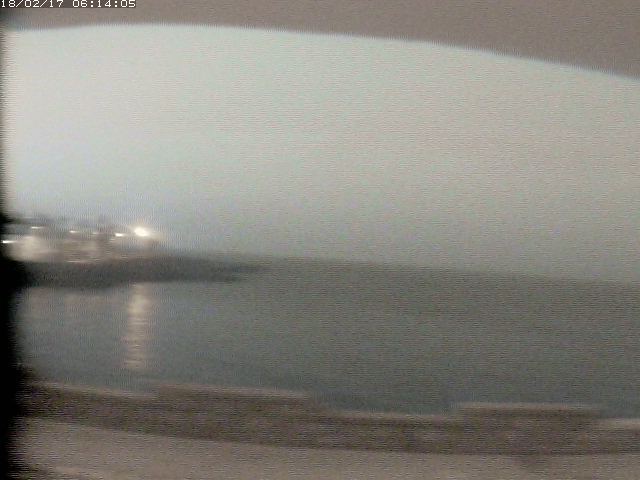
SIS Property and Tourism - Live webcam on Santa Maria al Bagno, Nardò, Puglia, Italy
Tuesday, July 07, 2009
SV691LS Puglia villa for sale Video
Splendid attached villa for sale on the Puglia west coast, ideally located right oh the hill of Santa Caterina, marina of Nardò, only 15 mins walking from the beach and the main piazza. It boasts a nice garden of approximately 200 sqm, a veranda, living room with fireplace, a kitchenette, a double bedroom, a twin bedroom, a corridor, a bathroom, a backyard with barbecue and a small cellar at the basement. Only few metres away from the coast and the piazza where all the restaurants and bars are located, 5 km from Nardò town centre, 9 kms from Gallipoli, 10 kms from Porto Cesareo and 60 kms from Brindisi international airport. Excellent long term investment and good rental potential. Asking price € 175.000,00. Please email us your request at info@sispropertyandtourism.co.uk or call us at 0039 347 0336568
http://www.italyflavours.co.uk/ http://www.sispropertyandtourism.co.uk/ http://www.pugliaestate.eu/
Thursday, June 18, 2009
Puglia homes and property for sale, Puglia property search, Salento holiday rentals. SIS b style=
Thursday, June 04, 2009
Nardò and its marinas within the 10 best places for holiday makers in Italy

Nardò and its marinas (Santa Maria al Bagno, Santa Caterina, Sant'Isidoro and Portoselvaggio) for the third year have gained the "5 Blue Sails" reaching a special place in the list and becoming more popular for their environment and their hospitality. Legambiente also gives the opportunity to discover small villages and local traditions of Italy, protected and promoted by “Piccola Grande Italia” (Small Big Italy) campaign, which aims to increase the value of our great heritage – environment, cultural property, local typical products and traditions – cherished in small Italian towns, the irreplaceable defence grounds of the Italian identity. The campaign has already involved 500 towns with less than 5 thousands inhabitants, mountain and provincial communities. http://www.legambiente.eu/documenti/2009/0528_guidablu/index.php
http://www.sispropertyandtourism.co.uk http://www.studioimmobiliarespano.it
Green shoots visible but crisis not over-G8 sources
Puglia: Lecce, the head town of the province, the place where the next G8 will take place.
May 25 (Reuters) - The global economic crisis is not over but the pace of decline has slowed and some positive signs are emerging in the United States and China, G8 sources told Reuters.
The sources, who are preparing the meeting of Group of Eight finance ministers in Lecce, Italy, on June 12-13, said documents being drawn up for the meeting note some encouraging signs.
"The papers we are working on ahead of the Lecce meeting say the first green shoots are emerging, in the United States and in emerging economies, especially China," one source said.
Another source said the global recession was not over, "but we are seeing a slowing of the speed of contraction."
"Green shoots" have become a frequently used term by policy-makers and economists in recent weeks as confidence and activity indicators in many countries have shown the first signs of improvement after many months of decline.
Source: http://www.guardian.co.uk/business/feedarticle/8524911
http://www.sispropertyandtourism.co.uk - http://www.studioimmobiliarespano.it
Tuesday, June 02, 2009
ITALY, Puglia: Residence Sofia... Buy a new stile of life!

Residence Sofia: Santa Maria al Bagno, Gallipoli, Lecce, Puglia, Italy
Off plan apartments for sale in a new luxury residence with courtyard, swimming pool and private garden or terrace. Residence Sofia consists of 8 units, 4 at the ground floor and 4 at the first floor. The apartments set at the ground floor have a covered area of approximately 55 sqm, a private garden of approximately 70 sqm, veranda of 7 sqm and outdoor car parking and boast a living room with kitchen corner, a bathroom, two double bedrooms.
The residences at the first floor have a covered area of approximately 55 sqm, balconies for 13 sqm and outdoor car parking. They boast a living room with kitchen corner, a bathroom, two double bedrooms, an extra room of 18 sqm at the top floor and roof terrace of approximately 42 sqm. The residence will be finished with high standard materials and features. Prices from EUR 150K. Read more on this property for sale in Puglia, Italy
View SV675 apartments in residence with common swimming pool, puglia in a larger map
Wednesday, February 04, 2009
Buying in Puglia, Italy

Puglia makes up the 'heel of the boot' in southern Italy. It has two distinct coastlines, high cliffs of the Adriatic to the east and the low-lying rocky shore of the Ionian Sea to the west. Italian families have holidayed here for years and it's not surprising. There are 300 days of sunshine a year, beautiful beaches, lovely countryside and fascinating towns and cities steeped in history.
The buyer: Annabel Moorsom
Annabel lives in South London and runs a PA recruitment company. She's a self-confessed lover of all things Italian and dreams of lazy summers soaking up Mediterranean sun on the west coast of Puglia. She's drafted in her friend Robert to help her escape busy London for Italian life, food and culture. She has a budget of up to £250,000.
Why Puglia?
With coasts on two sides, Puglia has got fabulous beaches in abundance and an impressive array of rather bijou resorts. Its towns have a modern buzz, but the architecture is a melting pot of Moorish, medieval, Byzantine, Romanesque and Baroque influences, as well as the intriguing trulli – white, cone-shaped houses that were built until the 1800s. Now they're the region's hippest holiday homes.Living in Puglia means living the good life. Great food is produced, cooked and eaten locally and nearly every day, the fishermen return to Gallipoli harbour and unload their catch straight into the fish market next door. A trip to buy your lunch is also a great way to meet the locals and catch up on the gossip.With all that fresh produce, Italian cookery courses are hugely popular. You can book a whole course or just take a day's class. And of course no Italian cookery class starts without the basics - pasta. Top of the bon viveur's list of things to do in Puglia is watching the sun go down. All along the coast locals and tourists search out a great spot to watch the daily spectacle. Sit in one of the bars up on the walls of the old town in Gallipoli and sip a crisp glass of Frizzantino as you watch the day disappear.
CLICK HERE TO VIEW THE FULL PAGE AND PLAY THE VIDEO.
Italy: Official Tourist Guide

Tuesday, January 27, 2009
Puglia: Flat for sale in a residence with common swimming pool
Beautiful apartment for sale in a smart development of 12 units with access to a stunning swimming pool. This apartment of 42 sqm is set at the ground floor of the residence Ginevra and consists of a living area with open plan kitchen, dining area and sofa corner, a double bedroom, a bathroom, a storage, an independent backyard of 33 sqm, a common courtyard with direct access to a great swimming. The residence, built to a high standard specification, is well located in Santa Maria al Bagno the main marina of the town only 700 mt away from the coast, 10 min drive from Gallipoli, 20 min from Lecce (known in Italy as the Florence of the South). Brindisi airport (Ryanair from London) is only 45 mins away and Bari airport is 80 mins away. There is also a 4 lane motorway that connects the airports to the residence area. Features: air conditioning, upto 4 sleepers, good rental potential.
 |
| SV649LM Brand New apartment in Residence, Italy |
Asking Price € 135.000,00
http://www.sispropertyandtourism.co.uk
Saturday, January 17, 2009
Brand New apartments and villas for sale in Puglia


View Larger Map
Different kind of mini-villas and apartments:
a) Ground floor apartments:
Built area: Ground Floor 56,18 sqm; Garden 50,48 sqm; Terrace 16,43 sqm;
Ref. A/13 (commercial area 80 sqm) Asking price € 98.000,00
This kind of apartments boasts 2 bedroom (3,10 x 3,10 mt - 3,50 x 3,03 mt), 1 bathroom (1,65 x 2,40 mt), 1 living room (3,19 x 2,84 mt), open plan kitchen (2,95 x 3,03 mt), garden and car parking.
b) First floor apartments:
Built area at first floor 51,13 sqm, at second floor 21,16 sqm; Ground floor garden 58,02 sqm; balconies first floor 21,16 sqm.
This kind of apartments, over two levels, boasts 2 double bedroom (3,50 x 3,03 mt - 3,10 x 3,10 mt), living room (3,19 x 2,84 mt), open plan kitchen (2,95 x 3,03 mt), bathroom (2,40 x 1,65 mt), balconies, garden, and car parking. At the second floor boasts a built area of 21 sqm to be used as an extra double bedroom or living room. roof terrace with sea views.
c) Independent 3-levels Villas
Built area at ground floor 51,92 sqm, at first Floor 37,80 sqm, at top floor 14,31 sqm, Garden Ground floor 137,38 sqm; Balconies 35,00 sqm; Terrace 24,33 sqm
Monday, November 17, 2008
Apartment for sale in Nardò, Lecce, Puglia, Southern Italy.
This is an interesting apartment for sale in baroque heart of Nardò, council in the province of Lecce and in the region of Puglia. Only few kilometres away from the Ionian west coast and the beatuful beaches of Gallipoli. The asking price is € 75.000,00, but there is a 15% reduction for a quick sale. Please note the price do not include the furnitures. Please contact us info@sispropertyandtourism.co.uk or call us 0039 3470336568.
Visualizzazione ingrandita della mappa
http://www.sispropertyandtourism.co.uk/ http://www.italyflavours.co.uk/
Friday, October 31, 2008
SIS Property and Tourism on A Place in Sun - Home or away

The region of Puglia is divided into the sub-regions of Daunia, Gargano, Tavoliere and Salento. It is then divided into provinces: Foggia, Bari, Taranto, Brindisi and Lecce. So it’s not straightforward to describe a location.


In 2005, budget airline started flying to Bari and Brindisi, opening up the area to the overseas property market. Property prices are three times cheaper per square foot than Tuscany so it’s still possible to find a bargain.

Click here to check the episode overview from A Place in The Sun website.
www.sispropertyandtourism.co.uk www.italyflavours.co.uk
Saturday, October 04, 2008
Salento and the "Barocco Leccese" from UNESCO World Heritage

In the course of the centuries, the landscape was moulded in turn by Greeks, Romans, Byzantines, Normans and Aragonese as this borderland acquired increasing strategic and commercial importance. (...)


Nardò, at the heart of the Salento peninsula, was an important centre in Roman times and increased its cultural, political and economic relevance during the Middle Ages and the Renaissance; in the 18th century, the works of the celebrated Neapolitan architect, Ferdinando Sanfelice, gave it its distinctly Baroque characteristics. This brilliant artist personally designed the church della Purità (1724) and the Cathedral's new façade (1725) and gave impulse to the innovations, already in full swing, focussing on a re-definition of architectural volumes and of the urban structure; the outcome can be admired in the scenic street wings, in the variety of road tracings (a good example is the one connecting the churches Santa Teresa, Santa Croce, San Francesco di Paola, Santa Chiara and San Giuseppe) and in several picturesque villas in the suburban area. (...)
Justification for Outstanding Universal Value
Satements of authenticity and/or integrity
These cities have maintained what is known as ‘Barocco Leccese' - the urban and architectural structures as well as and the decorations - so that this style's building, technological and formal characteristics are easily identifiable. Restorations were performed following adequate methodologies by the competent Superintendent and further improved this property's state of conservation.
Comparison with other similar properties
The architectural school known as ‘Barrocco Leccese' may , in general terms, be compared to that in Western Sicily (Noto, Siracusa, Catania) which, however, was accomplished in one particular circumstance, in the 17th century, immediately after the terrible earthquake. On the contrary, the ‘Barrocco Leccese' covers a much longer period so that a series of buildings, erected at different times, show an extraordinary continuity of style.
Read the full article on http://whc.unesco.org/en/tentativelists/1149/
http://www.sispropertyandtourism.co.uk http://www.italyflavours.it
Saturday, June 14, 2008
Santa Caterina di Nardò on the ITALIA the Enit Official Guide


Sunkissed.
A marvellous curve of wild, sunkissed beauty:
more than any other area, the Ionian Sea offers
profoundly close contact with nature. Corners
of unchanging beauty where the vivid colours
of the vegetation alternate with the extraordinary
remains left by the many ancient peoples
who, seduced by the landscape, put down
their roots there: from the Phoenicians to the
Greeks, and from the Normans to the Arabs. A
wreath of small tourist centres overlooking an
enchanted sea, where you can enjoy the relaxing
rise and fall of the waves. Moving towards
the interior, we find the primitive charm of a
natural environment still partly unexplored...
Tuesday, June 10, 2008
NASA Astronauts ad Nardò Ring in their photo gallery

image credit NASA/GSFC/METI/ERSDAC/JAROS,and U.S./Japan ASTER Science Team
The Astronauts put Nardò Ring in their photo gallery considering it one of the 20 most beautiful place in the world seen from the Space. http://asterweb.jpl.nasa.gov/gallery.asp
The Nardo Ring is a striking visual feature from space, and astronauts have photographed it several times. The Ring is a race car test track that is steeply banked to reduce the amount of active steering needed by drivers. The Ring lies in a remote area on the heel of Italy's "boot," east of the naval port of Taranto and encompasses a number of active (green) and fallow (brown to dark brown) agricultural fields. In this zone of intensive agriculture, farmers gain access to their fields through the Ring via a series of underpasses. Winding features within the southern section of the Ring appear to be smaller, unused race tracks. Read more on http://www.nasa.gov/multimedia/imagegallery/image_feature_1084.html
www.italyflavours.it www.sispropertyandtourism.co.uk www.pugliaestate.eu
Sunday, April 13, 2008
Down town boutique hotel in Galatone, Lecce, Puglia
View a larger map
" La Galatea" is a excellent down town Boutique Hotel located in the historical centre of Galatone and formed by 7 self contained apartments, 5 of them are located in the same building " Palazzo Carata- De Ferrariis " (1500-1700 -1800 a breathtaking example of the Baroque architecture and two of them (1500- 1600-1800 ) just 100 yards away. At the ground floor of " Palazzo Carata - de Ferrariis " is the impressing " La Galatea " club house - reception ( double cross vaulted ceilings, exposed stone walls, nice interiors , outstanding flooring) with internet cafe and lounge. The " Il Ficus " apartment guests 8 people, the " La Lavanda " apartment guests 6 people, " La Mimosa " 6 people, " La Ginestra" 4 people and has handicap facilities . The " La Verbena" apartment guests 6 people. The " Il Geranio " apartment guests 6 people, the " Il Glicine " apartment 6 people. This Boutique Hotel consists in about 10.ooo s.f. of covered surface as well as about 5.000 s. f. of terraces and court yards (open spaces).
http://www.sispropertyandtourism.co.uk http://www.italyflavours.it www.studioimmobiliarespano.it http://www.pugliaestate.eu
Friday, April 11, 2008
The heel of Italy, still wonderfully untrodden by British tourists, is home to some of the country's finest cuisine and wine. Francisca Kellett report
Puglia, the region comprising the "heel" (and the lower calf) of Italy, has long suffered invasions. Over the past 2,000 years and more, the Greeks, the Romans, the Turks and the Venetians have all rampaged through. But tourists have yet to launch a serious incursion and Puglia remains one of those destinations known only to devotees of Italy.
To the Italians, though, the delights of Puglia are nothing new. They've been drawn for decades by the rugged bright-white coastline, its silvery-grey groves of olive and almond trees, and the whitewashed villages of the ancient conical trulli houses.
But the scenery, though pretty, is mostly flat, and not the main draw for tourists; the real reason for coming here is the food and wine. Puglia makes 80 per cent of Italy's pasta and olive oil; there are bountiful crops of tomatoes, figs, fennel and melon, and mozzarella is made by many local producers. Both the northern plains and the Salentine Peninsula are given over to vineyards, producing particularly good reds from the primitivo grape, and some of Italy's best modern wines - known as the Super-Puglians.
Despite Puglia's strong rural feel, it also has a handful of appealing towns worth exploring, such as Lecce, with its extravagant honey-coloured Baroque stonework. The trulli town of Alberobello and the oddly octagonal Castel del Monte are the most popular sights, but even these are free of the crowds found in Tuscany or the Lakes.
While the beaches may not rival those of, say, Sardinia, there are some beautiful stretches that combine well with an inland stay. In the north is the Gargano peninsula, with well-developed sandy beaches, spectacular bright-white cliffs and the dark forests of the Foresta Umbra, popular with hikers and cyclists. Central Puglia has good family beaches, while the bright green coves of the Salentine peninsula have some of the cleanest bathing water in Italy.
Overall it's not an ideal family destination, but it's a good place for couples who are happy to split their time between pottering around little towns and basking on a beach. This falls in line with the choice in accommodation - many of the area's masserias (fortified farm houses) have been converted into smart hotels. They work particularly well for a short, early- or late-season break.
Above all else, Puglia is best-suited to those with a love of all things Italian. This is the place for long lunches, early evening passeggiate (strolls) and drinks watching the comings and goings of fishing boats. Italy's heel, visitors will find, is still a long way from being well-trodden.
(…)
Southern Puglia
Lecce: It's difficult not to be impressed by the frivolity of Lecce's extravagant baroque architecture. A haphazard grid of alleys characterises the centre, where each turn reveals a fresh set of excessive swirls and sculpted façades formed from a honey-coloured stone, which is malleable when quarried but quickly hardens, making it ideal for sculpting. Baroque churches and palazzos abound, but the finest building is the Basilica di Santa Croce, with its decorative stucco and superbly preserved figures.
The Salentine peninsula: South of Lecce is a small stretch of rugged coastline, with few beaches but a handful of seaside towns worth visiting.
Otranto: The old town of Otranto has long spilled beyond its 15th-century walls, but it is the tightly packed centre that remains the main draw. Here, narrow, car-free lanes paved with smooth ivory-coloured stone wind between pockmarked houses. Don't miss the Romanesque cathedral, with a stunning restored 12th-century mosaic covering the floor. Beyond the thick town walls is a modern seaside resort with a small harbour and palm-lined promenade. There's a handful of small but clean beaches, surrounded by cliffs dropping into crystal-clear turquoise water.
The coast road: From Otranto, the countryside opens up into fields - hazy with wildflowers and butterflies in June, parched brown in August - before the road heads back along the cliff-lined coast. It passes through a series of tiny settlements, taken over almost entirely by holiday villas. It's worth pausing briefly in the faded little town of Santa Cesarea Terme, which clings to rocks above a small cove. Have an espresso in Porta D'Oriente; it overlooks a spectacular Moorish villa with a burnt-orange dome and eccentric porticos.
Santa Maria di Leuca: At the southern tip of the peninsula is this lively resort town, with whitewashed houses and a broad promenade busy with strolling families and strutting youngsters. This is one of the few resorts with a beach, although it's small and narrow, with coarse yellow sand and rocky shallows.
Your move When to go June and September are the best times as the temperature has fallen to the high 20s, the main tourist sights are quiet and the beaches are empty.
(…)
Additional research by Nick Trend.
Read in full the article on Telegraph.co.uk
http://www.sispropertyandtourism.co.uk http://www.italyflavours.it
Saturday, March 22, 2008
Happy Easter 2008

Happy Easter 2008
from your Puglia Property Provider
www.sispropertyandtourism.co.uk
www.studioimmobiliarespano.it
www.italyflavours.it
Thursday, March 06, 2008
Trying Italy's heel for size
by Kathryn Hone
THE first time I visited Puglia was by car, travelling the length of Italy in one exhausting July day. After miles of parasols on the bland beaches that flank the Autostrada Adriatica, the road turns inland across a vast plain, the landscape unfurling like a giant map dotted with towns and villages as far as you can see.
On the left, a distant hump denotes the mountainous Gargano peninsula; to the right is a far-off line of hills like a giant's backbone. The red earth between is cultivated with olive groves and wheatfields.
We were bound for Gallipoli, on the Ionian Sea, inside the heel of the Italian boot. In the long, narrow strip of land that makes up Puglia, the southernmost Salento peninsula is the harshest, rockiest area in the whole impoverished region. It is also the least discovered by the outside world, and has the best swimming, in warm, clear water, that I have found anywhere in Italy.
The Ancient Greeks who created outposts of their empire in ports such as Gallipoli (“beautiful city” in Greek) must have felt at home. The arid limestone landscape of cacti and wild herbs feels like parts of Greece.
Today the old city still has a centre of whitewashed houses dominated by a medieval castle on the harbour. At the foot of the castle walls is a daily fish market, a pungent Aladdin's cave of stalls selling tuna, swordfish, squid and shellfish. But to reach the old town, especially in the height of the tourist season, you have to negotiate the traffic of the modern town, with its sprawling street market. Half of northern Italy seems to have come south in search of sunshine and seafood.
The debilitating heat means that our children greet ideas of cultural sightseeing with wails of protest, but we manage to coax them to Lecce, 40km (25 miles) away. The walled city is a golden yellow marvel of Baroque architecture and decoration, its sandstone carvings of beasts and angels on churches and palazzi seeming new-minted. We wandered into the main piazza, a gracious setting for the 17th-century cathedral, its Bishop's Palace and seminary.
It is still a lively university town, with many restaurants offering traditional cucina del Salento. The dishes were the result of poverty - not much meat, some fish, pasta, beans and many vegetables, both wild and cultivated. Orichietti, or little ears, is the distinctive shaped pasta, with cime di rapa, a kind of bitter broccoli; or ciceri e tria, chickpeas with home-made pasta.
Seaside trips were a more popular choice with the family.
Along the coast going north from Gallipoli we paused at the former fishing village of Santa Maria al Bagno, at the entrance to which are four large columns surrounded by palm trees, the remnants of a 17th-century fortress built to keep out Saracen marauders. Along the winding road around the next headland is the magnificent nature reserve of Porto Selvaggio.
We carried our picnic a mile through steep pinewoods throbbing with cicadas down to a rocky inlet. Here the coast is undeveloped, though it is a popular spot packed with visitors in July. The swimming is delicious because ice-cold freshwater springs run into the sea at this point, creating freezing patches of clear water.
An advantage of being on the Ionian coast is that it faces west: in the evening we sat on the rocks with a glass of wine and watched the red sun sink into the sea. Gallipoli's Ancient Greeks probably did the same.
http://www.sispropertyandtourism.co.uk


